

17 Sep Gluten Free Brunch Options in Tulsa, OK: What to Know Before You Go
About 2 million people in the United States live with celiac disease, according to the National Institute of Diabetes and Digestive and Kidney Diseases, and many more manage a non-celiac gluten sensitivity that shapes how they eat every single day. For anyone researching gluten free brunch options in Tulsa, that number is a reminder that this is not a niche request. It is a real dietary need that deserves a real answer, not a vague nod from a server who has not actually checked with the kitchen. Prospect Local Bar & Kitchen, the restaurant on the ground floor of Blue Dome Dining at 121 S. Elgin Ave in Tulsa’s historic Blue Dome District, serves brunch Monday through Friday from 6:30am to 12pm and Saturday and Sunday from 7:30am to 12pm, and this guide walks through what gluten sensitivity actually means at the table, what to look for on a typical brunch menu, and how to ask the right questions before you order.
Understanding Celiac Disease and Gluten Sensitivity
Celiac disease is an autoimmune condition in which eating gluten, a protein found in wheat, barley, and rye, damages the small intestine. Globally, celiac disease is estimated to affect roughly 1 in every 100 people, though only about 30 percent of those cases are properly diagnosed, according to the Celiac Disease Foundation. Non-celiac gluten sensitivity is a separate and more common experience, where gluten triggers uncomfortable symptoms without the same autoimmune damage. Both groups share the same practical problem when they go out to eat: a menu description rarely tells the whole story, and the difference between a gluten-free ingredient and a gluten-free dish often comes down to what touched the pan. For anyone building habits at home too, the Academy of Nutrition and Dietetics offers a practical grocery list guide for stocking a gluten-free kitchen.
Planning Gluten Free Brunch Options in Tulsa
The most useful thing anyone can do before eating out is to plan ahead rather than improvise at the table. That means checking a menu online in advance, calling the restaurant during a slower part of the day when staff have time to talk, and being specific about whether the concern is celiac disease, which requires strict avoidance of cross-contact, or a milder sensitivity, which may allow more flexibility. It also means understanding federal rules. The FDA’s gluten-free labeling rule sets a legal threshold of under 20 parts per million of gluten for any packaged food that carries a “gluten-free” claim, but that rule applies to packaged products on a shelf, not to a scratch-cooked plate coming out of a restaurant kitchen. A restaurant can be thoughtful and careful without meeting a formal labeling standard, which is exactly why asking questions in person still matters more than reading a menu alone.
Common Brunch Dish Types and Typical Gluten Content
Brunch menus tend to follow familiar patterns, and knowing which categories usually contain gluten makes it much easier to have a productive conversation with a server. The table below covers general dining categories that apply across most American brunch menus, not a claim about any single restaurant’s specific dishes.
| Dish Type | Typically Contains Gluten? | What to Ask About |
|---|---|---|
| Pancakes, waffles, French toast | Yes, typically contains gluten (wheat flour) | Whether a gluten-free batter or bread substitute is available |
| Eggs and most plain proteins (bacon, sausage) | Typically gluten-free if prepared without breading or sauces | Marinades, seasoning blends, and whether they share a cooking surface with battered food |
| Hash browns and roasted potatoes | Often naturally gluten-free, but can vary | Seasoning mixes and whether the griddle is shared with battered items |
| Fresh fruit | Naturally gluten-free | Whether it’s plated near shared garnishes or syrups |
| Baked goods (muffins, biscuits, pastries) | Typically contains gluten | Whether a gluten-free alternative exists that day |
| Sauces, gravies, and dressings | Varies widely; flour is a common thickener | Ask specifically, since these are easy to miss |
Note: Preparation methods vary by kitchen and can change from day to day, so always confirm specifics with your server before ordering rather than assuming based on the category alone.
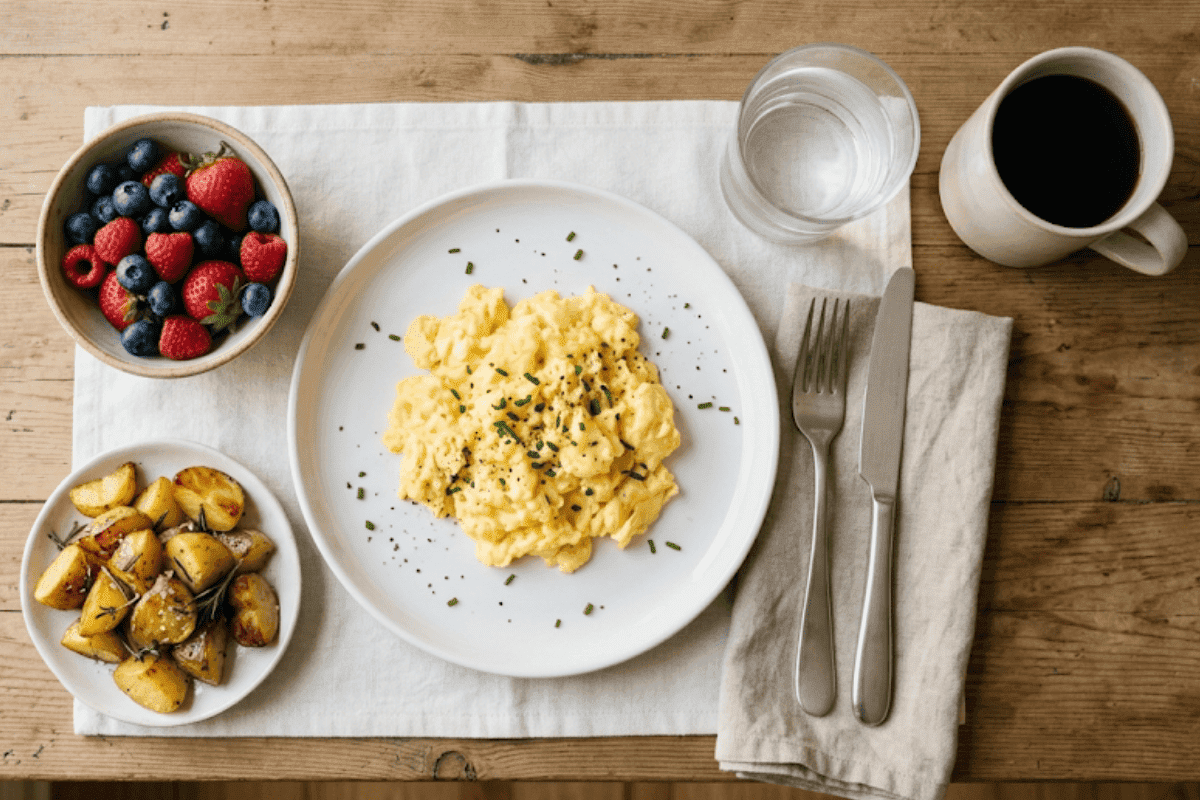
In plain terms, traditional pancakes and waffles typically contain gluten because they are built on wheat flour, while eggs, fruit, and most plain proteins are typically gluten-free as long as they are not breaded or finished with a shared sauce. Hash browns and potatoes are often naturally gluten-free but can vary depending on seasoning blends or whether they touch a shared cooking surface, and baked goods like muffins and biscuits typically contain gluten. None of this is a claim about what any one kitchen serves on a given morning. It is general dining guidance meant to help you ask sharper questions, and the disclaimer holds regardless of where you eat: confirm with your server, every time.
Why Choose Prospect Local Bar & Kitchen
Prospect Local Bar & Kitchen builds its brunch menu from scratch under the direct oversight of Chef Kevin Kihle, who has led the kitchen since 2018, rather than pulling recipes from a fixed corporate template shared across dozens of locations. That distinction matters for anyone with a dietary concern, because a kitchen that already works with raw, locally sourced ingredients and builds dishes to order is often in a better position to consider a substitution or a simple adjustment than a kitchen built around pre-packaged, centrally standardized components. To be clear, Prospect Local does not publish a dedicated gluten-free menu, does not label dishes as gluten-free, and does not have a formal, published dietary-accommodation policy, so no dish should ever be assumed safe without asking first. What the restaurant does offer is a scratch-driven approach to seasonal, locally sourced food in the heart of Tulsa’s Blue Dome District, and that approach often makes it easier to have a real conversation about what can and cannot be adjusted. If you’re managing celiac disease or a gluten sensitivity, the most reliable path is to call ahead, mention your needs when you book a table, and confirm details with your server the morning of your visit. It is worth planning your visit around that conversation rather than around a menu label that does not exist here.
Tips for Asking About Gluten Free Brunch Options
A short list of habits makes any restaurant visit smoother when gluten is a concern, whether you are dining at Prospect Local or anywhere else in Tulsa, Oklahoma.
- Call during a slower window, like mid-morning or early afternoon, so staff have time to check with the kitchen.
- Be specific about whether you have celiac disease, which requires strict cross-contact avoidance, or a general sensitivity.
- Ask how a dish is cooked, not just what is in it, since shared grills and fryers matter as much as ingredients.
- Mention your dietary needs again when your server greets your table, even if you already called ahead.
- Ask about sauces, gravies, and toppings separately, since these are the easiest gluten sources to overlook.
Questions Worth Asking Your Server
Beyond the basics, a few pointed questions about cross-contact tend to get the clearest answers from any brunch kitchen.
- Is this dish prepared without any wheat-based ingredients, including in sauces or seasoning blends?
- Is it cooked on a shared surface with breaded or battered items?
- Can the kitchen substitute or omit a bread or pastry component?
- Has cross-contact been considered, or should this be treated as a not-recommended dish today?
Prospect Local’s team is happy to walk through these questions when you call ahead or mention your needs while booking, and taking that extra minute before your visit is the single best way to plan a brunch that actually works for you.
Conclusion
Gluten free brunch options in Tulsa come down to preparation and communication more than any single menu label. Understanding which dish categories typically contain gluten, asking specific questions about preparation and shared equipment, and calling ahead before you visit are the habits that make dining out manageable for anyone with celiac disease or a gluten sensitivity. Prospect Local Bar & Kitchen’s scratch-built approach to brunch, rooted in locally sourced ingredients and shaped by one chef’s direct oversight since 2018, often makes those conversations more productive, even without a dedicated gluten-free menu. The next time you’re planning a morning in the Blue Dome District, reserve a table, mention your dietary needs when you book, and let the kitchen know what you’re working with before your order goes in.
Reserve a table for brunch and mention any dietary needs when you book, so the kitchen has time to talk it through with you.
Frequently Asked Questions
Where can I find the best gluten-free breakfast in Tulsa, Oklahoma?
Look for scratch kitchens that cook from raw ingredients, since they can usually adjust dishes more easily. Eggs, potatoes, bacon, and fruit are often naturally gluten-free, but ask how they are prepared. Prospect Local Bar & Kitchen in the Blue Dome District cooks brunch from scratch under Chef Kevin Kihle, so call ahead with your needs.
Where can I find the best brunch in Tulsa?
The best brunch depends on the setting and menu you want. In downtown Tulsa, Prospect Local Bar & Kitchen serves brunch Monday through Friday from 6:30 a.m. to noon and Saturday and Sunday from 7:30 a.m. to noon. Recent reviews and menus help narrow your list.
Who has the best gluten free breakfast?
No single restaurant wins for everyone, because safety depends on how a kitchen handles cross-contact. Choose a place willing to discuss ingredients, shared surfaces, and substitutions. Prospect Local Bar & Kitchen builds brunch from scratch, which often makes those conversations easier, though it does not have a dedicated gluten-free menu.
What is the best breakfast for celiacs?
Simple dishes built on naturally gluten-free foods are usually the safest starting point. Eggs, plain proteins, roasted potatoes, and fresh fruit are common choices. Always confirm preparation, because shared pans and surfaces can cause cross-contact.
What are 6 foods celiacs can eat?
People with celiac disease can eat naturally gluten-free foods such as eggs, fresh fruit, vegetables, plain meat and fish, rice, and potatoes. Processed foods and sauces need label checks because wheat can hide in thickeners. Cross-contact in restaurant kitchens is the main risk, so ask about preparation.

Sorry, the comment form is closed at this time.